
Uveitis
What is Uveitis?
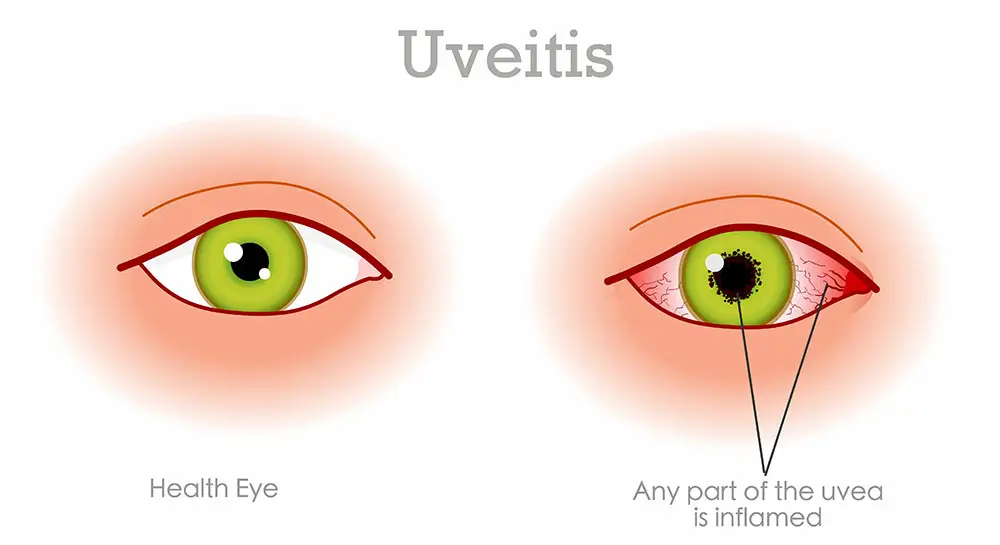
Uveitis, medically introduced as a form of eye inflammation affects the Uvea, the middle layer of the eye, consisting of the iris, ciliary body, and choroid, which affects individuals with redness, pain, and vision problems in their eyes, which in severe cases, may turn into vision loss as well. Classified into four types of eye inflammation on the basis of the affected region of the Uvea, such inflammatory condition may affect people of any age, impacting one or both of their eyes with anterior Uveitis (Iritis), intermediate Uveitis, posterior Uveitis, and Panuveitis.
What are the major symptoms of Uveitis?
Following are the symptoms of Uveitis, reported by the affected people that may vary depending upon the type of its severity: –
- Eye redness
- Eye pain
- Blurred vision
- Sensitivity to light (photophobia)
- Dark, floating spots in your vision (floaters)
What Causes Uveitis Eye Problem?
Following are the causes of Uveitis that may differ depending upon the case, they happen to be linked to autoimmune diseases, infections, or trauma.
- Autoimmune diseases such as rheumatoid arthritis, sarcoidosis, or Ankylosing Spondylitis trigger the Uveitis problem in people susceptible to the problem.
- Infections – Viral, bacterial, fungal, or parasitic infections, such as herpes, tuberculosis, syphilis, or toxoplasmosis.
- Eye trauma – Physical injury to the eye can also result in Uveitis.
- Idiopathic Condition – Unknown situations triggering the Uveitis syndromes in the individuals are known as idiopathic causes.
How is Uveitis diagnosed?
Following are the commonly used diagnostic options for Uveitis that may comprise comprehensive eye check-ups conducted by ophthalmologists.
- Visual sensitivity test helps assess how nicely you can see anything with your eyes.
- Slit-lamp check-up enables health specialists to observe and study the forms of the patient’s eye, including the cornea, iris, and eye lens.
- Fundoscopic test, another diagnosis, reveals the retina and rear of the eye in particular.
- Blood trials are also needed to observe underlying autoimmune conditions or infections in patients.
- Imaging tests such as X-ray, MRI, and Ultrasound also help in tracking down the factors behind occurrence of the Uveitis problem in individuals.
What are the treatment options for Uveitis?
The following are the treatment options chosen by doctors for Uveitis, which focus on subsiding inflammation, alleviating pain, and averting vision loss, taking into consideration the type and severity of the problem the person might be suffering from:-
- Corticosteroids – Eye drops, injections, or oral medications to reduce inflammation.
- Immunosuppressive medications or drugs are prescribed by the physicians if Uveitis is found associated with an autoimmune disorder/disease or when steroids fail to yield the desired outcome.
- Antibiotics/Antivirals – If Uveitis is caused by an infection, medications to treat the underlying infection will be administered.
- Surgery is the only option for treating the condition, but in rare cases only, by which vitreous gel is taken away from the eyes.
- Cycloplegic eye drops also may be used providing relief to patients from pain by relaxing their eye muscles and reducing spasms.
Prevention
Preventing Uveitis can be challenging because the condition often arises from underlying diseases, yet the following are a few preventive measures that help keep the problem at bay: –
- Managing systemic autoimmune diseases with proper medication.
- Regular eye check-ups, especially if you have a history of autoimmune disorders.
- Protecting the eyes from trauma and infections.
- Prompt treatment of eye infections.
Outlook/Prognosis
The prognosis for Uveitis largely depends on the cause, the part of the eye affected, and how quickly treatment begins. When treated promptly, many people recover fully without any lasting effects. However, delayed treatment or severe cases can lead to complications such as glaucoma, cataracts, or permanent vision loss. Chronic or recurrent Uveitis can be particularly challenging and may require long-term management.
Living with Uveitis
Living with Uveitis can be difficult, especially if the condition becomes chronic. To manage the condition, it’s important to: –
- Follow up with regular eye exams and appointments.
- Take prescribed medications as directed by your doctor.
- Monitor symptoms and report any changes, such as increased pain or vision problems, to your ophthalmologist immediately.
- Use protective eyewear to avoid trauma and reduce the risk of flare-ups.
- With proper management and timely treatment, many people with Uveitis can maintain good vision and lead a normal life.
Why Choose Tender Palm Eye Hospital for Uveitis Treatment in Lucknow, India?
Tender Palm Eye Hospital is a trusted name in advanced eye care in Lucknow, offering expert diagnosis and treatment for Uveitis – a group of inflammatory conditions affecting the Uvea, which can lead to serious vision complications if left untreated. Our experienced ophthalmologists and eye surgeons specialize in identifying the underlying cause of inflammation, whether infectious, autoimmune, or idiopathic, using advanced imaging and laboratory diagnostics.
We provide individualized treatment plans that may include corticosteroids, immunosuppressive therapies, and targeted biological agents, ensuring effective control of inflammation and preservation of vision. With a commitment to long-term management, we also offer routine monitoring and coordinated care with other medical specialists when needed. At Tender Palm Eye Hospital, patients with Uveitis receive comprehensive, compassionate care designed to protect and restore visual health.

